
Clinical Model
The Azalea Clinical Model
Recovery-focused psychosocial support, backed by clinical expertise.
Azalea supports participants with complex psychosocial needs through an integrated model combining recovery coaching, support coordination, accommodation, and registered nurse-led clinical oversight.
WHY WE EXIST
Supporting People Beyond Standard Service Delivery
Existing disability and mental health systems often fail participants with high acuity needs. Our model was built to close the gaps where traditional supports fall short.
Common Challenges
- Frequent hospital readmissions
- Complex mental health presentations
- Disengagement from services
- Housing instability
- Fragmented care with no coordination
The Azalea Response
- Coordinated, proactive support model
- Clinical and recovery integration
- RN-led oversight to maintain engagement
- Accommodation linked to clinical care
- Single coordinated team around each participant
THE FRAMEWORK
A Four-Stage Clinical Pathway
A structured, flexible pathway - adapted to the individual at every stage.
1
Assessment & Engagement
- Comprehensive intake
- Risk assessment
- Needs identification
- Clinical baseline review
2
Stabilisation & Support
- Immediate support coordination
- Crisis de-escalation
- Medication management
- Care coordination
3
Recovery & Capacity Building
- Recovery coaching
- Goal planning
- Community connection
- Skill development
4
Independence & Outcomes
- Transition planning
- Reduced support dependency
- Community participation
- Long-term sustainability
This framework is flexible and non-linear - adapted to each participant's pace and circumstances.
THE DIFFERENCE
Why RN-Led Support Matters
Clinical governance that most NDIS providers simply cannot offer.
- Frequent hospital readmissions
- Complex mental health presentations
- Disengagement from services
- Housing instability
- Fragmented care with no coordination
- RN-led and clinically governed
- Proactive, anticipatory care
- Clinical expertise embedded
- Fully integrated services
- Structured risk management framework
Clinical Governance
Rigorous clinical systems ensure every participant is safe and compliant.
Care Planning
Integrated multidisciplinary care plans built around the individual.
Health Monitoring
Ongoing clinical observation and documented health reviews.
Complex Needs Management
High-acuity behavioural and mental health support.
SPECIALIST CAPABILITIES
Supporting Complex Psychosocial Needs
Hospital Discharge Support
Why it matters
Many participants leave hospital without adequate community support, leading to rapid readmission. Azalea bridges this critical gap.
Outcome
Smooth, safe transitions from acute care to community living with reduced readmission rates.
Medication Monitoring
Why it matters
Complex psychiatric medications require vigilant RN oversight. Without clinical monitoring, risks of non-compliance and adverse events increase.
Outcome
Consistent medication adherence, early detection of side effects, and improved mental health stability.
Clozapine Monitoring
Why it matters
Clozapine requires mandatory blood monitoring and can cause life-threatening side effects without careful clinical management.
Outcome
Safe clozapine use in the community with full RANZCP-compliant monitoring protocols.
CTO Support
Why it matters
People under Community Treatment Orders need structured, clinically guided support to meet legal obligations and avoid re-hospitalisation.
Outcome
Consistent CTO compliance, reduced tribunal interventions, and improved community integration.
Complex MH Presentations
Why it matters
High-acuity mental health conditions including psychosis and severe personality disorders demand clinical expertise beyond standard support worker capacity.
Outcome
Safe, effective support for complex presentations including dual diagnosis and severe psychiatric conditions.
Risk Assessment & Management
Why it matters
Participants with complex needs require ongoing structured risk assessment frameworks to prevent crises before they escalate.
Outcome
Proactive risk management that protects participants, staff, and the broader community.
Multi-Disciplinary Coordination
Why it matters
Complex presentations require coordinated input from psychiatrists, GPs, allied health, and NDIS planners working together.
Outcome
Seamless care coordination that reduces gaps, eliminates duplicate efforts, and ensures holistic support.
Escorted Leave Support
Why it matters
Participants transitioning from inpatient settings need clinically supervised community access to rebuild independence safely.
Outcome
Structured, safe community leave that supports recovery and reduces restrictive practices.
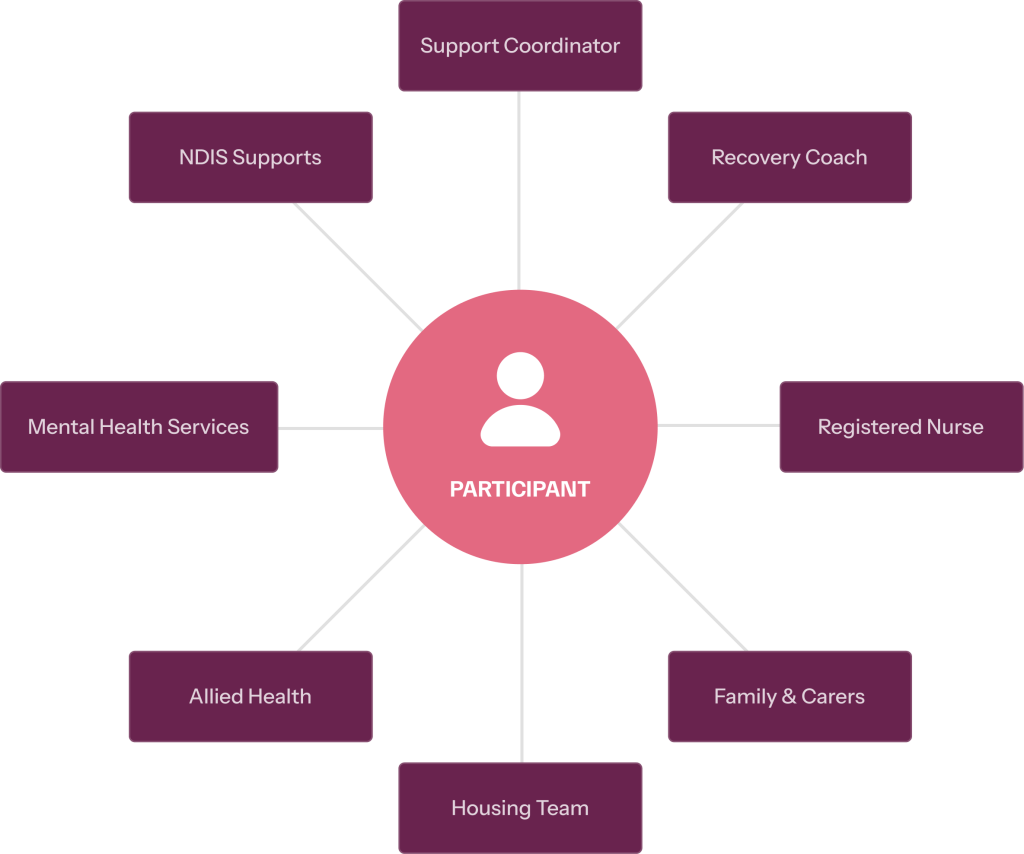
Working Together Around The Participant
Every participant is supported by a coordinated network — not a single service.
FOR REFERRAL PARTNERS
Information For Referral Partners
Who We Support
- Adults with complex psychosocial disability
- Participants with a history of hospital admissions
- People with dual diagnosis
- NDIS participants at any plan level
Referral Criteria
- NDIS participant or access-eligible
- Complex or high-intensity support needs
- Willing to engage with a clinical support model
- Located within our service footprint
Response Time
- Referral acknowledgement within 1 business day
- Initial assessment call within 3 business days
- Support commencement from 5-10 business days
- Urgent referrals assessed same day
- Fast Referral Review
- Complex Psychosocial Capability
- Clinical Oversight Guaranteed
- Metro & Regional Coverage
OUR OUTCOMES
What Success Looks Like
Our outcomes reflect the complexity of the people we support - and the strength of our clinical model.
87%
Improved Stability
74%
Reduced Hospital Admissions
91%
Improved Engagement With Services
83%
Greater Independence Achieved
79%
Improved Quality of Life
88%
Stronger Support Networks
*Based on participant and referral partner feedback across active cases.
FAQ
Frequently Asked Questions
What Qualifications Should My Recovery Coach Have?
It would help if you enquired about an NDIS recovery coach’s expertiseand qualifications when seeking one.
What Qualifications Should My Recovery Coach Have?
It would help if you enquired about an NDIS recovery coach’s expertiseand qualifications when seeking one.
What Qualifications Should My Recovery Coach Have?
It would help if you enquired about an NDIS recovery coach’s expertiseand qualifications when seeking one.
What Qualifications Should My Recovery Coach Have?
It would help if you enquired about an NDIS recovery coach’s expertiseand qualifications when seeking one.
What Qualifications Should My Recovery Coach Have?
It would help if you enquired about an NDIS recovery coach’s expertiseand qualifications when seeking one.
GET IN TOUCH
Let's Build The Right Support Around You
Whether you need support, free NDIS help, or just a conversation — we're here.